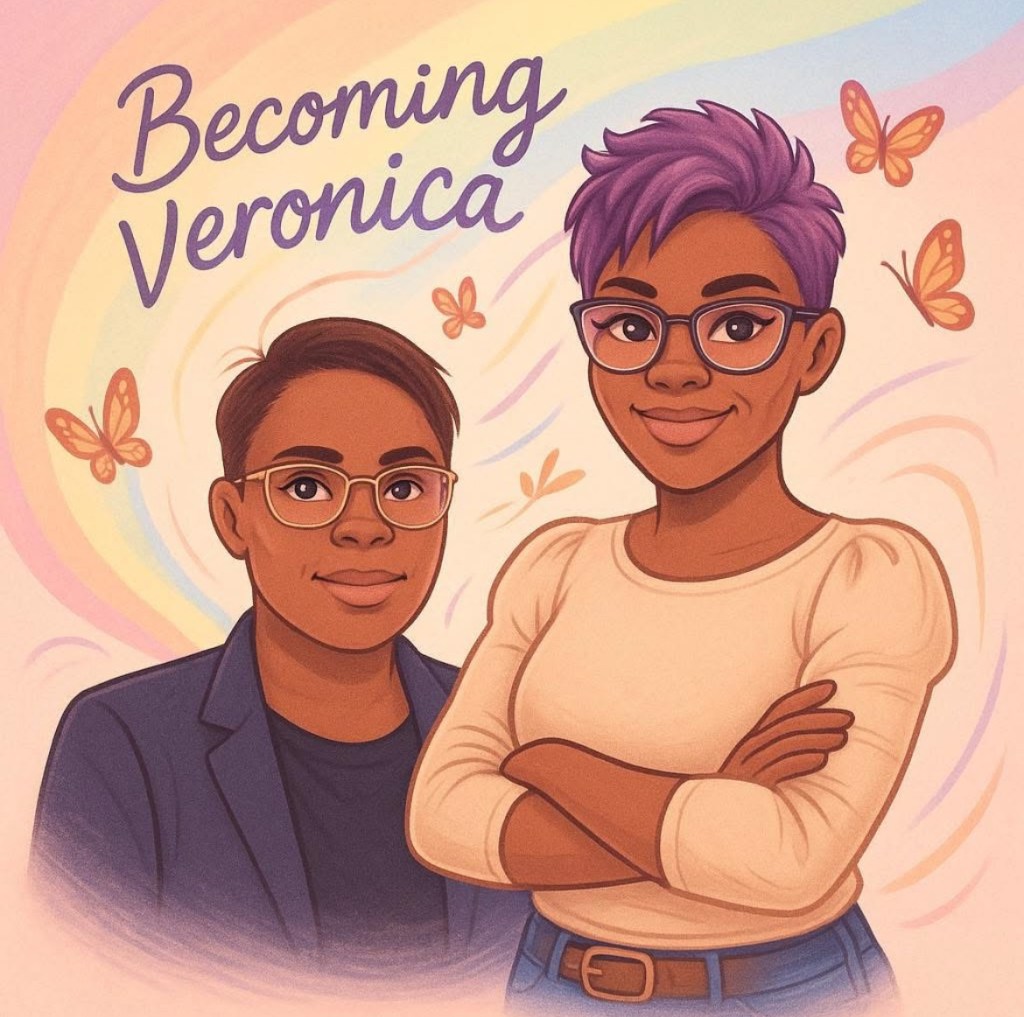
Veronica Unfiltered

healing, truth-telling, resilience, and my personal journey as a Black woman, survivor, mother, convicted felon, social worker, and attorney.

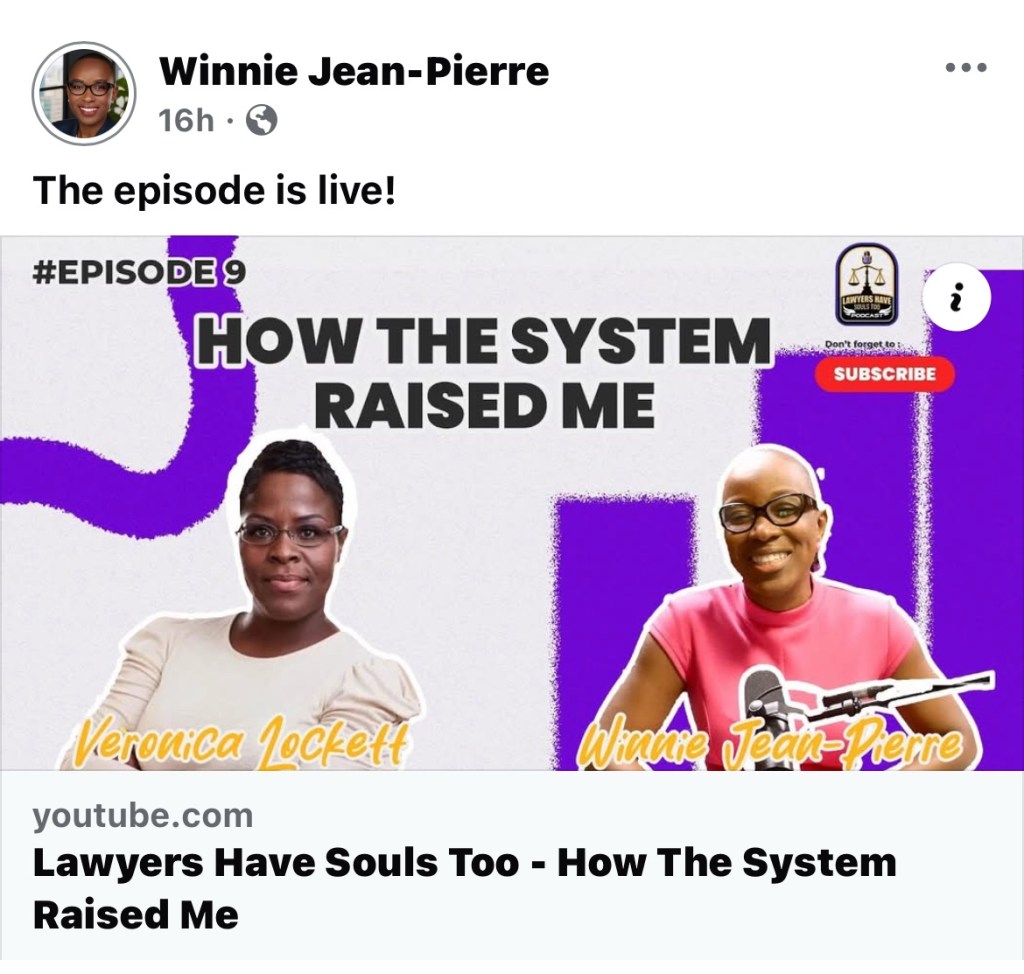
  • “How the System Raised Me: Reflections From My Lawyers Have Soul Guest Appearance”

    By Veronica Lockett

    There are moments in life when someone hands you a microphone, but what they are really offering is a mirror. It is a moment to see the pieces of yourself you survived, healed, carried, and transformed. That was my experience on the Lawyers Have Soul podcast.

    When I speak publicly about my journey, I do not speak from the mountaintop. I do not have a mountaintop.

    I speak from the middle. The in between spaces where trauma, faith, survival, and purpose meet. The spaces where you are still healing, still learning, still growing, still hurting, still becoming. The spaces where life shaped you in ways you did not ask for but learned to navigate anyway.

    This interview pulled me back into those rooms.

    The First Memory: Pig Feet, Chitlins, and Silence

    When they asked about my earliest memory, I laughed to myself because the truth was not pretty or poetic. It was pig feet.

    That is what came to mind first. Not trauma. Not chaos. Pig feet. The food that told me I was in someone else’s home and that I did not belong.

    I remember the smell.

    I remember the feeling.

    I remember being a child trying to figure out how to be grateful for whatever was placed in front of me, even when it made me want to cry.

    Foster care teaches you to appreciate anything given to you, even things that are not meant for you. That lesson follows you long into adulthood.

    The System Teaches You Not to Expect Stability

    People assume the hardest part of foster care is leaving your home. They do not understand the deeper pain. The pain of learning that stability is a luxury.

    Moving from place to place shapes your sense of trust. Being treated like a number shapes your identity. Learning to survive shapes your relationships.

    You learn not to trust.

    You learn not to depend on anyone.

    You learn to build walls long before anyone has a chance to hurt you.

    Even now, at 44, part of me still wants to belong to something. And part of me still wonders if I ever truly will.

    My Mother and I: Two Sentences and One Prison

    Some parts of my story sound like fiction, even to me.

    Like the last six months of my prison sentence, when the system placed my mother and me on the same unit.

    Two generations of pain in one dorm.

    Two histories.

    Two wounds that never had a chance to heal.

    Two women who never learned each other outside of trauma.

    She is gone now, but that time forced me to face everything I had tried to outrun. Anger. Abandonment. Grief. And the version of myself shaped by survival instead of safety.

    For the first time, I had to sit with my own reflection.

    And it changed me.

    Domestic Violence, Mislabeling, and Becoming the Aggressor

    In the interview, I talked about my domestic violence experience. At the time, the system did not recognize me as a victim.

    I was young.

    I was scared.

    I did not know better.

    And instead of being seen as someone who needed protection, I was labeled the aggressor.

    With what I know today, I understand that the system would view me differently now. But back then, Black women were not granted vulnerability. We were not granted softness. We were not granted protection.

    We were expected to endure.

    And many of us still are.

    Prison Changed Me Through Reflection, Not Punishment

    People assume prison hardened me.

    The truth is prison forced me to be still.

    Still enough to see my own cycles.

    Still enough to understand my patterns.

    Still enough to ask myself the hard questions.

    Why was I still writing my abuser? Why was I still trying to go back?

    When I finally put his name on the I 60 and cut off contact, something shifted.

    Not instantly.

    But honestly.

    That is when healing began.

    Social Work, Lived Experience, and Seeing People Clearly

    After prison, I did not know where my life was going.

    I only knew I wanted to help people like me. People without a voice or people who did not know how to use theirs.

    Social work gave me language.

    It gave me purpose.

    It gave me a way to turn survival into service.

    But it also showed me the limits of the system.

    How professionals lacked humanity.

    How parents were judged for conditions created by poverty, not by choice.

    How empathy was a skill and not a standard.

    And that is when I realized something powerful.

    Compassion alone cannot fix a system.

    You need power.

    Becoming an Attorney: Turning Pain Into Power

    I went to law school because I was tired of watching attorneys walk into court, talk for two or three minutes, and walk out with recommendations that shaped an entire family’s life.

    I kept thinking, if this is all they have to do, then I can do it too.

    I knew I had something law school could not teach.

    Life taught me.

    Foster care taught me.

    Prison taught me.

    Motherhood taught me.

    Homelessness taught me.

    Healing taught me.

    And now, through Veronica Lockett Law, PLLC, I advocate with a perspective most lawyers will never have.

    Lived experience is my expertise.

    Writing From the Middle

    During the interview, I said something that has guided my entire writing journey.

    I do not write from the mountaintop.

    I write from the middle.

    Because the middle is where most people live.

    Right in the thick of it.

    Still processing.

    Still hurting.

    Still becoming.

    Still trying to understand themselves while carrying what they survived.

    This podcast reminded me why I started Veronica Unfiltered.

    The page does not judge you.

    The page lets you breathe.

    The page lets you tell the truth.

    And today, this is my truth.

    I was raised by a system that was not designed to protect me.

    I became a woman who protects others anyway.

    I turned survival into a calling.

    I turned pain into purpose.

    I turned silence into testimony.

    And I will continue to tell the truth. For the child I was. For the women I advocate for. For anyone who needs to know they are not alone.

    Veronica Out. . .

  • When “Helping” Turns Heavy: The Art of Balancing

    By Veronica

    Writing from the in-between spaces.

    There are moments when the scales tilt too far.

    Not because I have lost my sense of purpose, but because the weight of other people’s urgency starts pressing against my peace.

    As a lawyer, I hear stories layered with fear, frustration, and principle. People come seeking help, but sometimes they come wanting rescue. And there is a difference. One requires partnership; the other demands self-abandonment.

    I used to blur that line, believing compassion meant saying yes. That is what social work taught me: to listen deeply, hold space, and fix what is broken. Law, though, taught me something social work did not: the cost of carrying someone else’s chaos under my license, my time, and my sanity.

    Boundaries are not barriers; they are filters for integrity. Saying no does not mean I do not care. It means I care enough to keep my work honest, sustainable, and effective.

    Lately, I have been thinking about balance not as a 50-50 scale but as a moving center. Some days empathy gets more weight. Other days logic takes the lead. The art is knowing which voice to follow when both speak at once.

    I have learned that my body tells me before my brain catches up. When a conversation tightens my shoulders or my pulse picks up for the wrong reasons, that is information. That is wisdom whispering, this energy does not belong to you.

    So I listen. I breathe. I remember that professionalism is not cold; it is clarity. And clarity is kindness.

    Balance is no longer about doing it all; it is about doing what is aligned. It is about honoring the work and myself in the same breath.

  • Familiar, Not Famous: What I Hear When Cardi B Talks About Survival

    By: Veronica

    Jay Shetty Podcast, On Purpose ft CardiB

    There’s a certain kind of truth that doesn’t need translation. The kind that comes from women who’ve lived through the grind and still found a way to hold their heads high. When Cardi B talks, I don’t just hear a celebrity story. I hear survival. I hear the kind of woman who’s had to be resourceful, unbreakable, and misunderstood all at once.

    She’s not talking theory. She’s talking memory. The kind of lessons that aren’t written down anywhere, but get passed from struggle to struggle, mother to daughter, and woman to woman. When she says she brushed the corners of the apartment by hand, I know that’s not about cleaning. That’s about control. When you grow up in spaces that life forgot, pride becomes your first currency.

    When Cardi B Talks, I Don’t Hear Fame; I Hear Familiar

    When Cardi B talks about brushing corners by hand, I know exactly what that means. I’ve lived in places where no matter how clean you kept it, there were still roaches, still mice, still someone upstairs who didn’t care as much as you did. Clean didn’t mean perfect. It meant pride. It meant, “I’m still trying.”

    I’ve been that woman in the welfare office with my head held high, trying to explain what I need without losing my dignity. The system doesn’t care that you’re doing your best. You learn to navigate it without breaking, because breaking isn’t an option when you’ve got mouths to feed and rent due.

    When Cardi says, “Even if you get with a man with money, you should have your own,” I feel that in my bones. I’ve lived enough to know that stability tied to someone else can disappear overnight. Foster care taught me not to rely on anyone. Love taught me not to trust men who say they’ll never leave and then do.

    I’ve always been the responsible parent. The one who fills out the forms, pays the bills, shows up, figures it out. Now I’m doing it without a W-2, trying to make entrepreneurship work on a budget, still carrying that same quiet promise: my kids will never feel instability the way I did.

    Cardi’s story isn’t just about the come-up. It’s about the mentality, that middle-to-lower-class knowing, that no one’s coming to save you. That’s what connects women like her and women like me. We hustle differently, but the root is the same: survival, self-respect, and the will to build something steady out of what never was.

    The Shared Language of Survival

    What I love most about women like Cardi B is that we speak the same language, even if our lives look different now. It’s the language of people who’ve had to make something out of nothing; who’ve learned how to stretch food, time, and patience. It’s the unspoken bond between women who’ve stood in line for food stamps and still showed up to work the next day acting like everything’s fine.

    We recognize each other by the way we keep going, by how we hold our families together, by how we still dream even when the math doesn’t add up. That’s the part people miss when they reduce women like us to “too much.” They don’t see the grace it takes to survive what we’ve survived and still have softness left in our voice.

    What Survival Teaches You

    Survival doesn’t make you bitter. It makes you honest. It teaches you the kind of humility that never forgets where you came from, but also the kind of faith that doesn’t need applause.

    It’s why I root for women like Cardi. Because beneath the music and the headlines, I see a woman who refuses to let her beginnings define her ending. That’s the quiet dream every working-class woman carries: to outgrow what broke her without pretending she’s forgotten it.

    And for me, that’s what being Veronica Unfiltered means, telling the truth about where I’ve been, but not letting it limit where I’m going.

    Thank you joining me again in the middle.

  • Hunger and Humiliation

    By: Veronica

    We lived off Salinas then. I was in the second grade at Blackshear Elementary, already carrying more shame than a child should know.

    I dreaded going to school, not because of the lessons, but because of the way I looked and smelled. My clothes rarely changed. The fabric held on to the scent of sweat, mildew, and a body that wasn’t washed often enough. My face was covered with bandages from ringworm, raw reminders of what we lacked. I knew when I walked into that classroom, all eyes would land on me, not in friendship, but in ridicule.

    One morning, I decided I could not bear it. I told my mother the school doors were locked, spinning a lie I hoped she would believe. She did, and for a brief while, I felt the relief of escape. But truth has a way of finding its way back. My teacher came to the house, exposed me, and instead of handling it in private, my mother turned it into a spectacle. She made me write a story about the lie and read it aloud in class. My humiliation became the lesson.

    The children already made fun of me for being dirty, for smelling bad, for existing outside the unspoken codes of childhood acceptance. Their laughter was sharp, cutting deeper than any bruise. I learned to shrink myself, to sit quietly on the edges of the room, to pray for invisibility.

    But invisibility had limits. One day, my teacher pinched me, her fingers sharp against my arm. I told my mother. The teacher lied, insisting it never happened. For a moment, I felt the familiar script of shame, that maybe I should fold, stay quiet, retreat again into the shadows. But I refused. I held to my truth, and this time, my mother believed me. She defended me.

    That moment did not erase the hunger or the ridicule, but it carved something into me. I learned that truth has a voice, even when everything around me insisted it should stay quiet. Years later, I would carry that lesson into every role I stepped into. As a social worker, I fought for families no one wanted to see. As an attorney, I defended clients the system had already judged. As a storyteller and speaker, I learned to shape my own scars into testimony.

    The courage began here, in hunger and humiliation, where I first discovered the power of refusing silence.

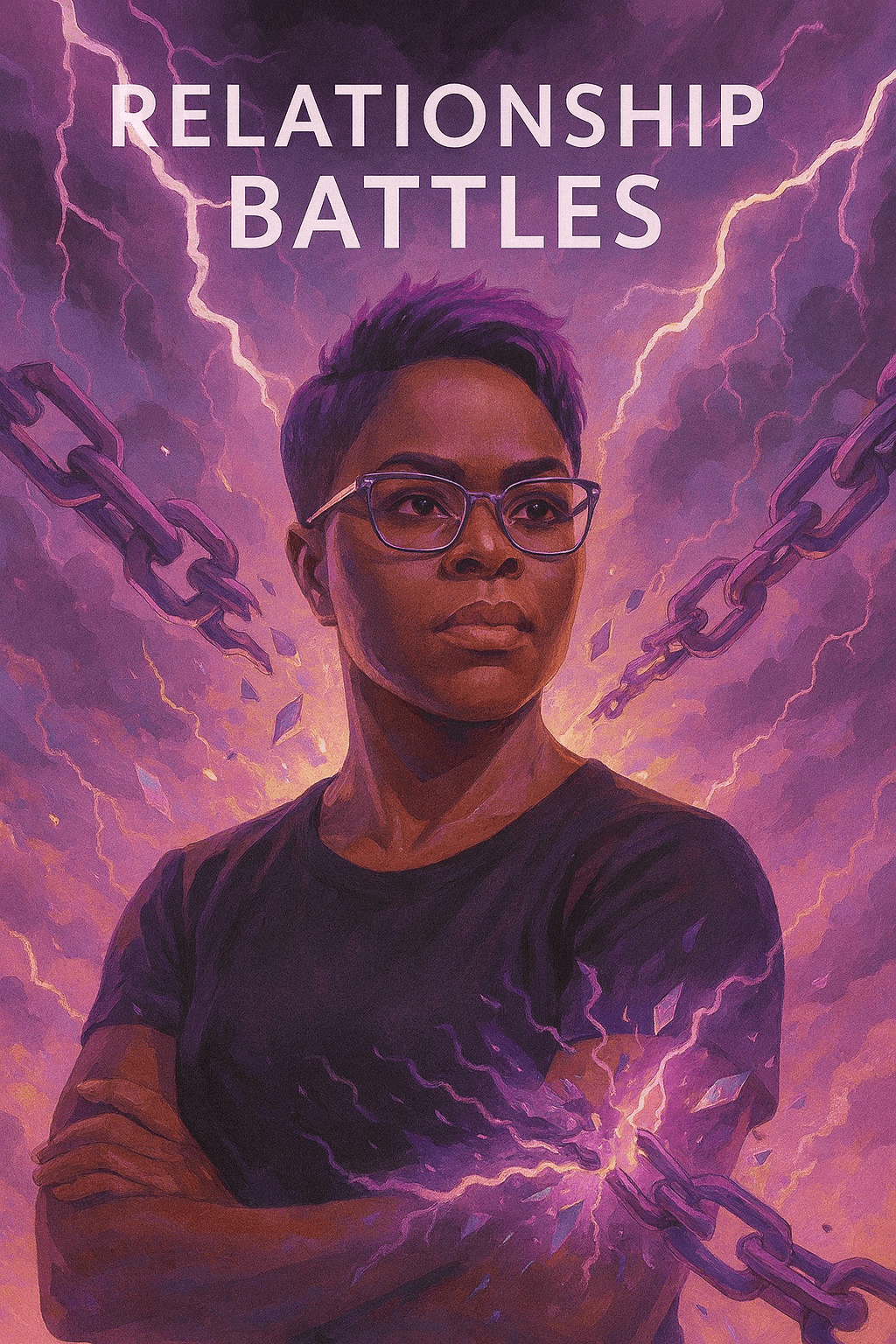
  • Protected: Relationship Battles: Isn’t Just My Story

    This content is password-protected. To view it, please enter the password below.

  • Ancestral Pain

    By Veronica

    My mama always said her uncle was murdered for dating a white woman. Her voice would change when she told it—stern, certain, full of generational rage. She said the police looked the other way. That he was killed because white folks didn’t want him messing with one of theirs. It was one of the reasons she didn’t trust white people. Not the only reason—she had her own scars—but this was one she carried like proof.

    His name was Clinton Lockett. Her uncle. My great-uncle.

    She told me he’d been dating a white girl and someone—maybe her family, maybe the police—took him out for it. And for a long time, I carried that version like a family heirloom.

    But years later, while going through old newspaper archives, I found the real story. It wasn’t the one Mama had passed down. I texted her a photo of the article.

    She laughed loud—almost like she was trying to keep from crying.

    “All these years,” she said. “I had the story wrong.”

    She didn’t sound embarrassed—just stunned. Like a page in her internal history book had been rewritten while she wasn’t looking.

    Clinton was just 22 when he was killed. According to the paper, he had been arrested back in 1949 for trying to date a white girl in the Queensborough section of Shreveport. They charged him with what they called a “dangerous and suspicious act”—a catchall used to criminalize Black folks when no real crime had occurred. He was sentenced to a $100 fine or 100 days in jail, plus an added 60 days.

    He escaped later that year and fled to Mississippi, where he was convicted of burglary and grand larceny and sentenced to five years in the state penitentiary. The police didn’t know he had returned to Shreveport—until he turned up dead.

    The night Clinton was killed, he was reportedly prowling around a home on Ziegler Street. A 51-year-old Black woman named Lillie Mae Lewis said she heard someone outside and fired a .32 caliber pistol through her window, aiming at the sound. Her son came outside and found Clinton’s body at the foot of their steps. The bullet struck his shoulder, severed a major artery, and passed through both lungs. He died from internal bleeding.

    No one was charged. The woman said she was afraid.

    Mama didn’t know any of this. Neither did I—until I read it in black and white.

    She’d grown up believing her uncle died at the hands of white people for being with a white woman. And I don’t think it was just a story she was told—I think it helped her make sense of everything else. Her mistrust wasn’t just about Clinton. It was about the things that had happened to her. About being raped by a white foster father. About the way her grandmother, Minnie, wouldn’t talk about her son after he died. About the silence she learned to live with.

    She told me that Minnie’s parents had been enslaved. That matters, too. The things they didn’t say lived alongside the things they couldn’t forget.

    When Mama said she didn’t trust white people, it wasn’t always about the individual. It was about memory. About history. About what it meant to survive.

    Clinton Lockett’s death wasn’t the story my mama thought it was.

    But it was still a tragedy.

    And even though it didn’t happen the way she believed, her version told the truth about the world she lived in.

  • Birth and Early Trauma

    A Personal Reflection

    By Veronica

    There are parts of my story that begin before I could speak—before I could even breathe on my own. I’ve spent a long time trying to make sense of those beginnings. Not to judge them. But to understand the soil I sprouted from.

    This chapter isn’t just about birth. It’s about legacy. Inheritance. Love wrapped in pain.

    Here’s how it began.

    A Choice Made in Uniform

    It was August in Austin—thick heat pressing against the windows as I entered the world. Just four months earlier, mom had been honorably discharged from the Air Force; she refused to abort me. She traded in her uniform, her salary, and her housing. No marching orders could override her decision. She walked away from the military with a swollen belly and an unshakable conviction: I was worth it.

    Home was wherever we landed next, not a place prepared for new beginnings.

    But she had made her choice.

    She did what she could.

    What she knew.

    What trauma had taught her.

    And when I arrived early—sick, vulnerable, fighting to breathe—I believe she still held on to the hope that love would be enough.

    The Early Arrival

    I came a month too soon. Not quite ready, but already here.

    They say stress does that—sends babies tumbling into the world before the calendar says it’s time. She was under pressure no one should carry alone. She was using drugs. There was chaos in her body and in her life. And I, tiny and unprepared, paid the toll for it.

    There was no carefully decorated nursery waiting. No shower gifts or hand-me-down cribs. Just a fragile baby and lungs not yet ready for the world.

    My mother said I was sickly. Vulnerable.

    But she loved me.

    In her own way, shaped by a life that hadn’t offered her many examples of nurturing, she showed up. Not perfectly. Not always gently. But she didn’t leave, not immediately anyway.

    Her Trauma, My Inheritance

    She had her own wounds—deep ones. Her childhood was a storm she never escaped.

    Foster care. Abuse. Silence. Rape.

    She was sexually assaulted by the man who was supposed to protect her—her foster father.

    Generational trauma wrapped itself around her like a second skin.

    By the time I was born, she was already broken in places I would never fully understand.

    I lived in the aftermath.

    Because the trauma never left her; it just shifted shapes. It made its way into how she accepted her partners, how she coped, and how she parented.

    No Diagnosis, Just Damage

    Mental illness ran through her unmedicated and unnamed.

    No therapy. No diagnosis. No relief.

    Only rage, withdrawal, unpredictability.

    I didn’t know how to describe it as a child. I only knew that love came with sharp edges.

    That safety didn’t live in our home.

    And that sometimes, the person who gave you life could also be the one who made it feel unbearable.

    Despite my mother’s undiagnosed mental health, trauma, pain, and limitations, she chose to bring me into this world.

    Held and Unheld

    I imagine her in the hospital, watching me through the plastic walls of an incubator. Wanting to hold me, but scared. Not just scared of hurting me—but maybe scared of failing me. Or of being seen. Or of what it meant to have brought another life into a world. A world that had already failed her so many times.

    There’s a tenderness in that imagining.

    A grief, too.

    Love Complicated by Pain

    She loved me. I know that. I’ve never questioned it.

    But love mixed with unhealed trauma isn’t always soft.

    Sometimes, it’s sharp around the edges.

    Sometimes it withdraws.

    Sometimes it breaks things before it can build them.

    That was my introduction to love.

    Real, but complicated.

    What Ifs and Echoes

    I think about how much lighter our story might have been—hers and mine—if the cycle had been interrupted.

    If I had come into the world healthy, without fear.

    If survival hadn’t been my first lesson.

    I don’t ask these questions to place blame.

    I ask them because they live in me—quiet, persistent echoes from the beginning.

    Love was there.

    But so was pain.

    I’m still learning where one ends and the other begins.

    ✍🏾 If you’ve ever had to unlearn what love looked like…

    If you’ve ever been born into pain and spent your life making meaning out of it, I see you.

    Feel free to share your story in the comments—or simply sit with mine—in the middle.

    There’s no rush.

    Healing, after all, has its own timeline.

  • Origins and Identity

    By: Veronica

    My mom served just eleven months at Bergstrom Air Force Base before being discharged. She was pregnant with me and refused to get an abortion. Summer of 1981, I was born. 😜

    A Name Without a Father

    She always said my father was a man named Darrell Hudson. But the truth is, she didn’t really know who my father was.

    And for a long time, I believed her.

    I carried that name in my mind for most of my life. I had a faint memory of him taking us school shopping at a mall. I remember being scared to go down the escalator—completely frozen, afraid it would swallow me up. He tried to make me go. I think he tried to spank me for refusing. I don’t remember if he actually followed through, but the moment stayed with me—the fear, the tension, the sense that I didn’t really know him.

    Chasing a Name

    As an adult, I started looking him up online. I studied his Facebook page. I wanted to see myself in his face. We had things in common—math, taxes—and I convinced myself that his son and my daughter looked alike. I tried to make him fit. I tried to make myself fit.

    But when I met him in person, I knew. He wasn’t my father. There was no spark of recognition. No familiarity. He offered to take a DNA test. I declined. Maybe I didn’t want another disappointment spelled out on paper. Maybe I didn’t want to admit I’d spent my whole life chasing a name that didn’t belong to me.

    The Test That Changed Everything

    Years later, I took a DNA test through Ancestry, and that changed everything.

    One of my closest matches was a girl listed as my paternal first cousin. We started talking. Together, we discovered that we both shared a DNA connection to a child fathered by Betty’s son. Betty—who I would later come to know as my aunt. That connection helped narrow things down to a set of three brothers. Any one of them could have been my father.

    Meeting Cousin Paul

    Around that same time, I met Cousin Paul. We connected while I was still trying to sort through names and locations. Paul helped put the puzzle together. He confirmed the brothers’ names and where they had lived. He gave me context. When we met in person, he didn’t hesitate. He looked at me, smiled, and said, “Yup! You family.”

    It was simple. Direct. Sure. And for a moment, I let myself rest in that certainty.

    Faces That Felt Familiar

    One of the brothers—David—lived in Louisiana. We talked first on the phone. He told me about his childhood, how he’d felt like an outsider in his own family. He said I reminded him of Hattie. We exchanged photos, and he said I had her softness.

    When we met in person, I noticed how our torsos matched—short and stocky. I pointed it out, and we both laughed. He told me I had his mother’s hair. That moment felt special. Not because I was sure he was my father, but because I saw myself in someone else for the first time. He asked if I’d brought the DNA kit with me. I hadn’t. But it meant something to me that he was open to it.

    Letters and Calls

    Another of the brothers lived in the Maryland/D.C. area. I didn’t wait for him to find me—I mailed letters to every address listed on Ancestry. Each letter included a short summary about who I was, what I was looking for, and how to contact me. He did. He called.

    He had a military background and a calm, thoughtful demeanor. We talked on the phone. He didn’t hang up. He didn’t dismiss me. We never met in person, but he gave me space to speak, and I’ll always be grateful for that.

    Silence from the Third

    The third brother had already passed away. I reached out to his children. His daughter wasn’t interested in talking. His son and I connected briefly through Facebook Messenger. He seemed open at first. I called him once. He never answered. We never spoke directly.

    A Video Call with Aunt Betty

    One of the most powerful moments came when I got on a video call with Aunt Betty. I was nervous. Everything I’d heard about that side of the family made it sound fractured, tense, and guarded. My heart was pounding when she said she wanted to see me because, in her words, I “didn’t sound Black.”

    But when she appeared on camera, I froze. Then I laughed.

    “You look like me,” I said before I could stop myself.

    She smiled. “You look like Hattie,” she said.

    That moment meant more than she knew. She told me about the family, the brothers, the dysfunction, and the love that sometimes got buried underneath it all. I wasn’t just chasing shadows anymore—I was speaking to someone who could trace the map for me.

    Stories from Paul

    Later, I got to spend more time with Cousin Paul. He was just as warm as he’d been the first time. He shared more stories about growing up with the brothers, about serving in the military with two of them, and about what the family had been like long before I came searching. He helped fill in gaps I’d carried my whole life.

    More than anything, Paul helped me feel grounded. I had spent so many years floating—untethered, unnamed. With Paul, I felt like I had something to hold on to. He gave me history. He gave me place. He gave me kinship.

    Staying Connected

    We still stay in touch—mostly through Facebook and occasional phone calls. After law school, and especially after I lost support from my son’s father, I didn’t have the time or flexibility to stay physically connected. But I try to show up digitally when I can.

    Loss I Didn’t See Coming

    There was grief, too. Quiet, sharp grief. I learned that my paternal grandmother had died the same year and month my son Ryan was born. I had been looking for her—looking for her family—right around the time she passed. I was just up the street and didn’t know. I felt like I lost her before I even found her. But maybe, just maybe, Ryan gained her spirit.

    Still No Clear Answer

    I still don’t know which of the three brothers is my father. I’ve gathered the pieces. I’ve followed the trail. I’ve done the work. But that answer may never come.

    And no, I don’t feel like I belong. Not fully. Not yet.

    The people I’ve met have been kind. The stories have mattered. But they haven’t filled the space that’s been empty my whole life. There are still questions that will never be answered, and ties that don’t quite bind. The connections are meaningful—but they don’t make me whole.

    One Simple Question

    If I could ask any one of those men just one thing, it would be simple: Which one of you is my father? That’s the only question I carry. I don’t need apologies. I’m not looking to rewrite the past. I just want to know.

    What Might’ve Been

    Sometimes I wonder what life might’ve been like if I’d had that answer as a little girl. If someone had told me I came from a line of military men. If someone had said there were people who could have raised me, people who would’ve claimed me. But then again… would it have made things better? Or just different?

    My Mother’s Silence

    I don’t think my mother’s silence was meant to punish me. I think it was simply the truth—she didn’t know. She’s admitted as much. Her past, her choices, her uncertainty—all of it shaped the blank space I was born into. She couldn’t give me answers she didn’t have. But that silence still echoed through everything.

    A Taste of Family

    When I spent time with Cousin Paul for the Fourth of July—twice—it felt joyful. I miss him. I think about how different things might have been if I’d grown up with people like him around. I struggle now to make space for family. I wasn’t raised with that rhythm. It doesn’t come naturally.

    Distance Between Siblings

    I didn’t grow up with my siblings in the traditional sense. Foster care, time, and separate lives created distance between us. We’re not disconnected, but we’ve never really had family routines or shared traditions to keep us closely knit. We each move through life in our own way.

    One of my brothers struggles with mental illness. The other tends to keep to himself. Celeste passed away years ago, and I still think of her often. As for Wendy, Calandra, Angela, and Kaiya—we have love between us, even if it doesn’t always show up in the usual ways. We do not all share the kind of bond that comes from growing up together. We did the best we could with what we were given.

    Still Searching but not really

    So no, I don’t feel torn between two families. I’m still figuring out what it means to even have one.

    Some things stay unresolved. And maybe that’s the truth I’ve had to live with—not knowing, but still moving.

    What about you?

    1. Have you ever searched for a missing piece of your identity—something you weren’t sure you’d ever find?

    2. How has silence or unanswered questions shaped your relationship with family?

    3. Do you believe knowing where you come from changes who you are—or just how you see yourself?

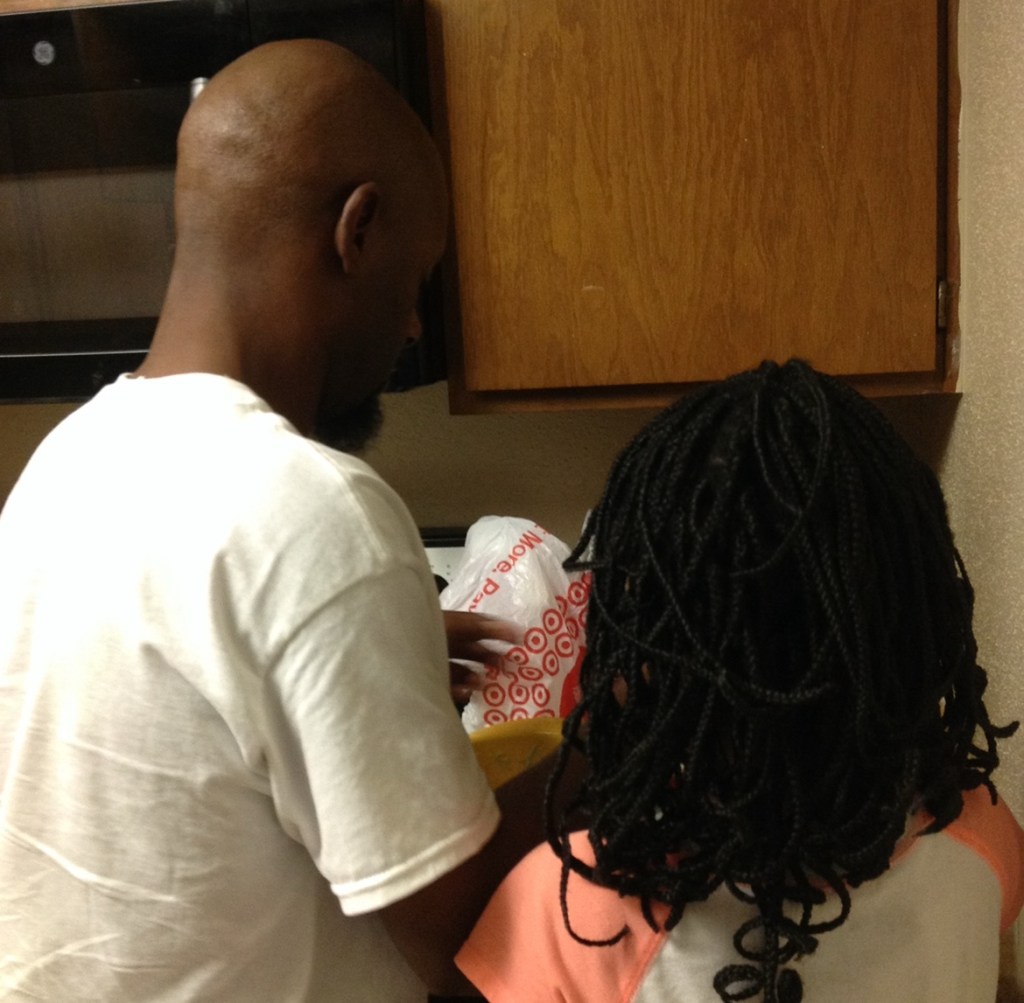
    Dad teaching his offspring to be confident in his ability to walk.
  • When Your Career Becomes a Coping Mechanism

    By Veronica

    I didn’t become a lawyer because I thought the system was fair.

    I became a lawyer because I knew what it felt like to be discussed in courtrooms without a voice.

    I was the child sitting silently while adults—lawyers, judges, caseworkers—debated what should happen to me. At first, I accepted it. I didn’t think I had the right to speak. But by the time I was sixteen, that changed.

    I started speaking up in court because I was tired of being talked about like I wasn’t even there. I didn’t have formal training, but I had something else: a quiet knowing that my voice mattered, even if no one had ever told me that before.

    I found my voice at sixteen. But when I signed for that two-year sentence, I still hadn’t figured out how to use it to protect myself.

    Before the Chaos, There Was a Dream

    I had been drawn to the idea of being a lawyer since ninth grade—before the chaos, before the heartbreak. But it got buried under disappointment and survival. For a long time, it felt out of reach.

    Before prison, I had enrolled in college to study criminal justice. I was trying to turn my life into something meaningful. But I was also trapped in an abusive relationship—physically, emotionally, sexually. That relationship cost me everything. I prioritized a man who broke me, and I ended up in the Texas Department of Criminal Justice serving a two-year sentence.

    Prison Didn’t Break Me— Shit, I Was Already Broken

    It took me six months behind bars to realize that I had been my own undoing. That realization hit hard. But I didn’t process it with peace or acceptance. I spent the next twelve months angry—at the guards, at myself, at the world.

    I didn’t follow rules. I refused to turn out for work. I shut down. I acted like I didn’t care, even though deep down, I did. The staff wrote me up over and over, and I stopped trying to explain myself. I wasn’t fighting—I was just done.

    Eventually, the warden placed my mom—who was also incarcerated—on the same unit as me. We were assigned to the same dorm. I was bunk 9; she was bunk 10. The warden said she hoped it would calm me down. And strangely, it did.

    Seeing my mom reminded me of how far I’d come just to end up here. I was taken from her at 9. And now we were sleeping just feet apart in a prison dorm—like some full-circle trauma I never asked for.

    Starting Over Isn’t the Same as Healing

    After I was released, I tried to start over in Lubbock. I was on extended probation from one county and had just served time for charges from another. I moved in with my sister. Found a job. Fell into more relationships I had no business being in—some emotionally unavailable, some dishonest, most damaging in one way or another.

    But I was raising children now. Trying to hold it together. Trying to be good, stable, and safe—even when I didn’t feel good, stable, or safe inside.

    That’s when I went back to school, this time for social work. I wanted to help people, but even more than that, I think I was trying to understand people. Understand myself.

    Still, nothing about rebuilding my life was easy. I was a Black woman with a felony conviction. That combination came with stigma, silence, and doors that closed before I could even knock. I couldn’t afford to mess up, be late, or be tired—not if I wanted people to see more than my record.

    I had to outwork what people assumed about me before I said a word.

    Law Was a Way Back to the Table

    I eventually started working with youth who had survived trafficking. It was heavy. I saw kids being misunderstood, misjudged, mishandled—again.

    And this time, I wasn’t the kid in the courtroom. I was the social worker in the hallway watching lawyers speak on behalf of children they barely knew. That was my tipping point.

    I decided to go to law school—not because I believed the courts could fix everything, but because I couldn’t stand to be powerless again. I wanted to be in the room where decisions were made. I wanted to be heard. I wanted my clients to be heard.

    But even getting into law school was layered with fear. I didn’t know if I’d even be allowed to practice. I was chasing a dream I wasn’t sure I had permission to hold. But I went anyway—because deep down, I knew: I didn’t come this far just to ask for permission to exist.

    The Weight of Performance

    Law isn’t my whole identity—and I don’t always feel confident in it, either.

    Imposter syndrome still shows up more often than I’d like to admit. There are days I question whether I belong in the spaces I’ve fought to be in. But law has given me structure. It’s given me purpose on days when everything else in my life felt unstable. And for a long time, I leaned on it—hard.

    And the truth is, I didn’t realize I was using work to cope. Not at first. I thought I was being productive. Responsible. Strong.

    But slowly, I began to feel the cost.

    I stopped sleeping well. I gave everything to my clients and kept nothing for myself. I tried to hold it together in court, and most days I did. But the pressure built up.

    At times, the frustration showed—in my tone, in my posture, in moments I couldn’t keep quiet. I wasn’t unraveling. I was burning out. And it was getting harder to hide.

    I didn’t know how to stop. I only knew how to perform. To produce. To push through.

    Eventually, it wasn’t sustainable.

    Learning to Pause

    My therapist suggested that I prioritize my mental health. My kids—my kids—begged me to rest. My body broke down in a way I couldn’t ignore. My surgeon’s medical recommendation was six weeks or more for recovery.

    That’s when I realized something that should have been obvious:

    I had turned my career into a coping mechanism.

    And I was confusing survival for success.

    It’s hard to untangle your worth from your work when work has been your anchor for so long. But I’m starting to try. I’m learning to slow down. To listen to my body. To recognize when I’m performing strength instead of actually feeling okay.

    I’m Still Here

    I’m still a lawyer. I still show up for my clients.

    But I’m no longer willing to disappear inside the work. I’m done sacrificing my health, my peace, and my sense of self just to prove I belong.

    I’m not here to pretend like I’ve got it all figured out. I’m still healing. Still trying to slow down. Still learning what rest feels like—and what I might find in it.

    But I do know this: I am not my productivity. I am not my past. I am not just the woman who always gets it done.

    I’m beginning to wonder who I am beneath the performance.

    What life might feel like when I’m not constantly bracing.

    And maybe that’s the beginning of softness—not a goal, but a question I’m finally letting myself ask.

    Let’s Engage

    Have you ever used work—or something else—as a way to cope?

    What has burnout looked or felt like in your life?

    What helps you slow down when survival mode has been your default?

    Who are you, underneath the performance?